

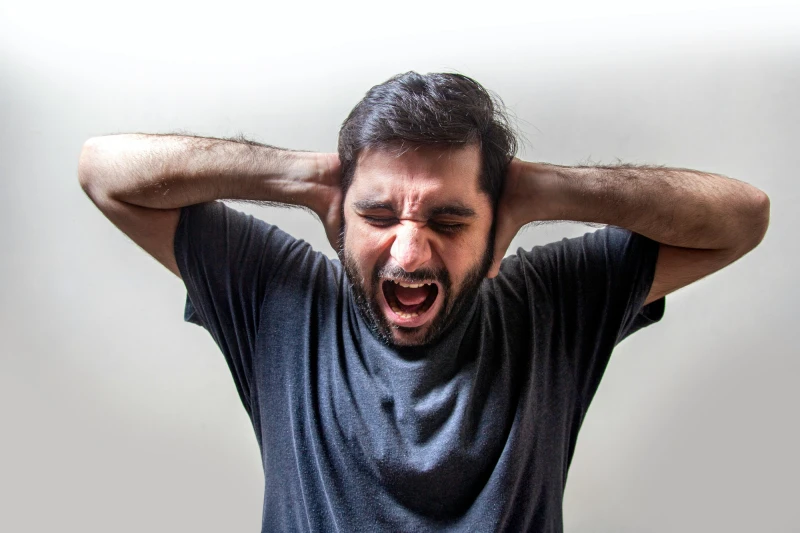
A panic attack is a sudden surge of intense fear or anxiety that arises without an obvious external trigger and typically reaches its peak within 5–10 minutes. Although the physical symptoms usually subside relatively quickly, the subjective experience is often perceived as a catastrophe.
According to the American Psychiatric Association (APA), approximately 1 in 75 people experience panic disorder, and up to 22–23% of the population will have at least one panic attack at some point in their lives.
Source: APA – Anxiety Disorders
How to recognize a panic attack
Symptoms usually appear abruptly and often include several of the following at the same time:
| Category | Typical symptoms | How it feels subjectively |
|---|---|---|
| Heart and breathing | Rapid heartbeat, tightness in the chest, shortness of breath | “I’m having a heart attack” |
| Body | Sweating, trembling, chills or hot flashes, dizziness | “I’m going to faint” |
| Mental state | Fear of death, losing control, or going crazy | “I’m losing my mind / dying” |
| Perception | Derealization, depersonalization, tingling in the limbs | “This isn’t me, this isn’t my body” |
Source: Mayo Clinic – Panic attacks
Source: StatPearls – Panic Disorder (PubMed)
Why is this happening to me?
There is no single confirmed cause, but current research highlights several contributing factors:
- genetic vulnerability
- a generally elevated baseline level of anxiety
- chronic stress and prolonged exhaustion
- major life changes (loss of a loved one, the birth of a child, relocation)
- excessive consumption of caffeine or alcohol, or abrupt withdrawal from certain substances
What to do during an attack
A short list of techniques that help many people in the moment:
- Remind yourself: “This is a panic attack. It is uncomfortable but not dangerous, and it will pass.”
- Slow your breathing: inhale for 4 counts → hold for 4 → exhale for 6–8
- 5-4-3-2-1 grounding: name 5 things you see, 4 you can touch, and so on
- Cold water: splash your face or hold your wrists under cold running water
- Have you ever tried speaking to the attack out loud or internally, as if calming a frightened child?
- How does the intensity change if you start walking slowly or counting steps?
When to seek professional help
It is advisable to consult a specialist if:
- panic attacks occur more than once a month
- there is a persistent fear of the next attack
- you begin avoiding places, transportation, or situations
- your overall quality of life has noticeably declined
Modern, evidence-based approaches include cognitive behavioral therapy (CBT), particularly exposure-based methods with response prevention, as well as medication support when indicated and supervised by a qualified professional.
Answer: For many people, with appropriate therapy and ongoing self-work, panic attacks either disappear completely or become very rare and mild. It is important to recognize, however, that some individuals may retain a heightened sensitivity to anxiety—and that is normal.
Question: Is panic disorder inherited?
Answer: A genetic predisposition can exist, but it is not a life sentence. Environment, upbringing, and learned coping skills play a major role.
Disclaimer: This article is intended for informational and educational purposes only and does not replace consultation with a qualified psychiatrist or psychotherapist. If you experience severe or recurring panic attacks, please seek professional help.